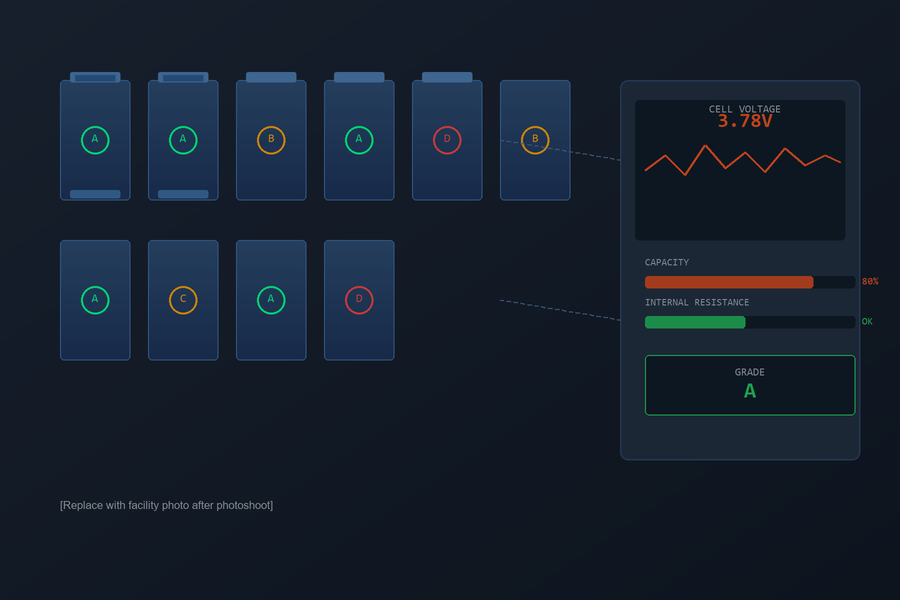
Cell-level capacity, internal resistance and anomaly testing for used EV batteries. Every pack is graded and receives a digital health certificate before it goes anywhere else.
What is battery precycling?
The step that comes before recycling.
In electric vehicles, battery precycling is the initial assessment, testing, and safe disassembly or sorting of used batteries before they undergo full material recycling or second-life repurposing.
Skip it, and packs with plenty of usable capacity end up shredded. Do it properly, and healthy modules get a second life while recyclers receive clean, sorted material. Source: SortBat
Key steps
How precycling works at MIVASA.
01
Health assessment
Batteries are hazardous, so we follow international standards. Technicians inspect each battery’s condition, state of charge and structural integrity to see whether it qualifies for second-life energy storage.
02
Safe disassembly
Healthy modules chosen for reuse are carefully detached. Units that aren’t viable are safely discharged.
03
Sorting & routing
Reusable modules go to our second-life battery line. The remaining components go to certified recycling plants for shredding and material recovery.
Testing
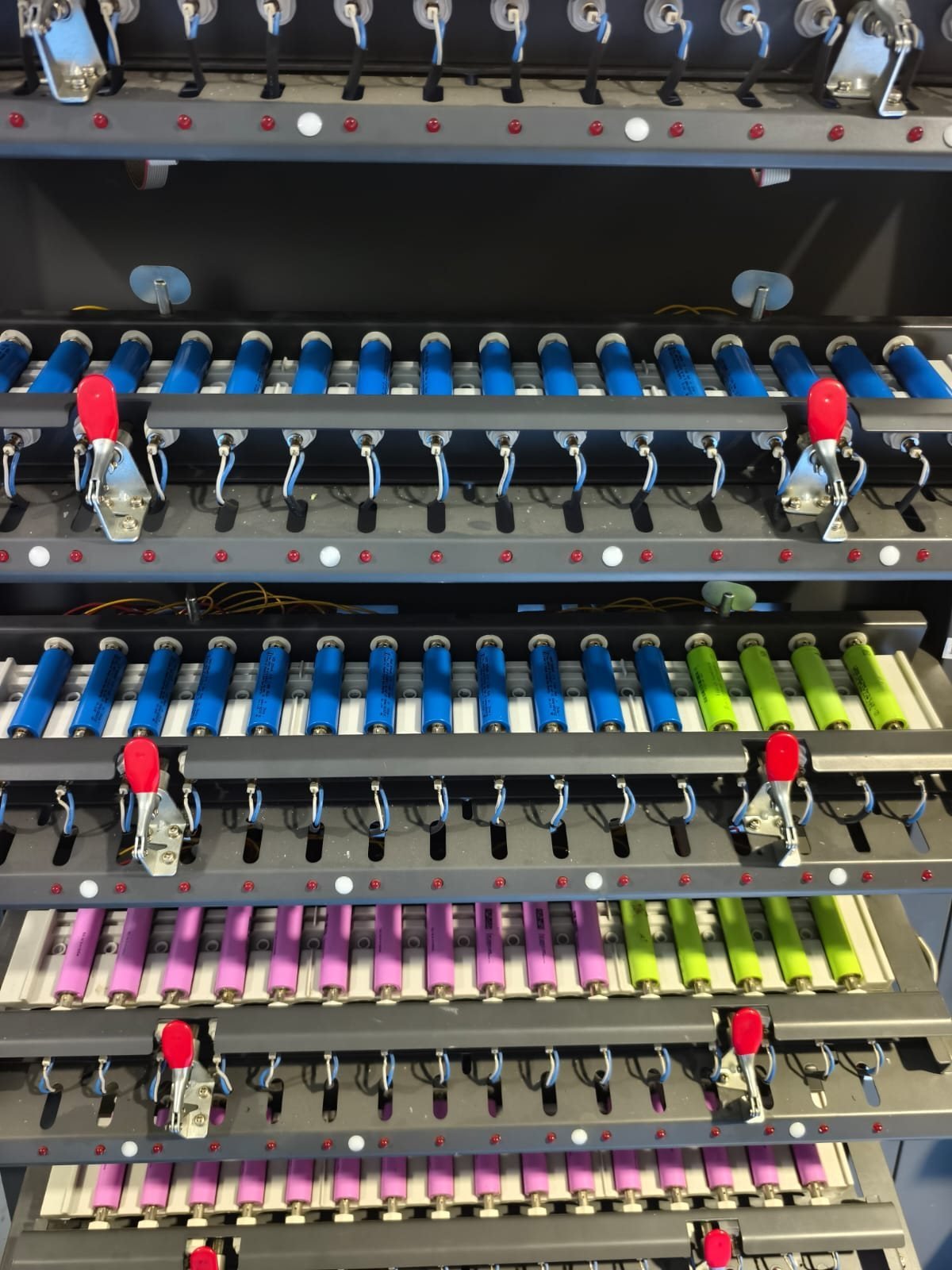
Every cell measured, not sampled.
Our grading racks test cells individually for capacity, internal resistance and anomalies, across NMC and LFP chemistries.
For OEMs
Meet take-back obligations with tested, documented packs.
For recyclers
Receive sorted input instead of whole, mixed packs.